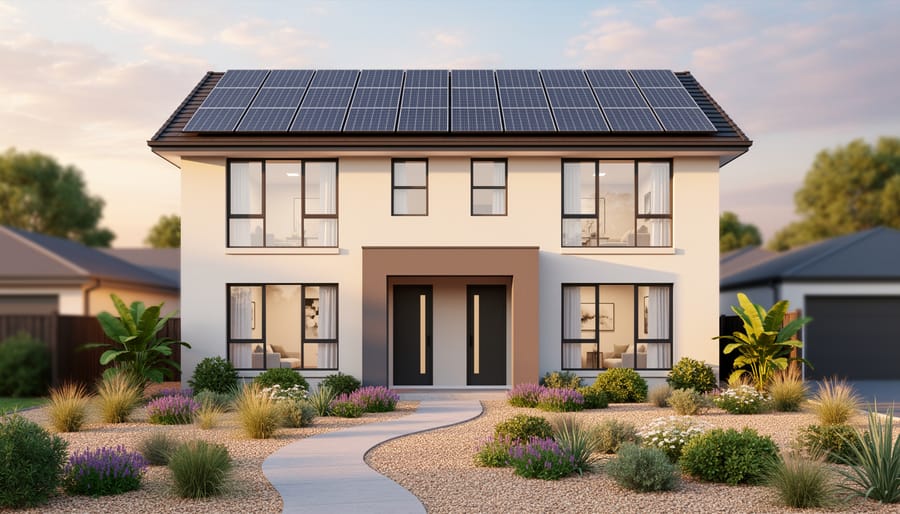
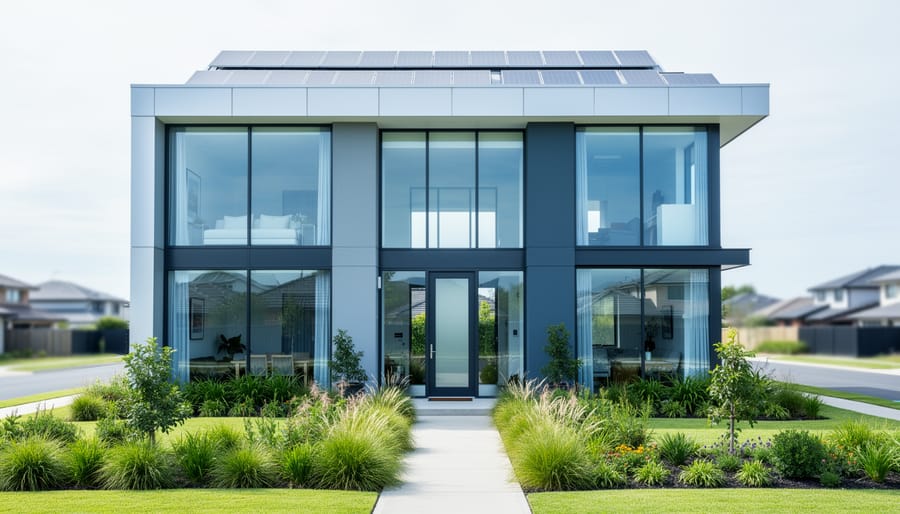
Modern green home design in 2026 typically costs between $150 and $400 per square foot for new construction, compared to $100 to $250 per square foot for conventional builds. That 30 to 50 percent premium reflects investment in energy-efficient systems, sustainable materials, and specialized design expertise. Renovating an existing home with green upgrades runs $25,000 to $150,000 depending on scope, from basic efficiency improvements to comprehensive sustainable retrofits.
The largest cost drivers are solar panel systems (often $15,000 to $35,000), high-performance windows and insulation, geothermal heating and cooling, and premium non-toxic finishes. Location matters significantly. Building codes, climate zone requirements, and regional material availability can shift your bottom line by 20 percent or more.
Here’s what makes this investment more accessible than you might expect: many green features pay for themselves through lower utility bills within five to fifteen years. Federal tax credits, state rebates, and utility company incentives can cover 20 to 40 percent of qualifying expenses. Strategic choices, like prioritizing envelope efficiency over luxury finishes or phasing projects across multiple years, let you achieve sustainable design without financial strain.
The key is understanding which green elements deliver the most environmental and financial return for your specific situation. Some upgrades, like LED lighting and programmable thermostats, cost mere hundreds and start saving immediately. Others require larger upfront commitment but transform your home’s long-term performance and comfort. Smart planning means you can build or renovate green at nearly any budget level while creating a healthier, more efficient space that holds its value for decades.
Modern Green Design Costs by Project Scale
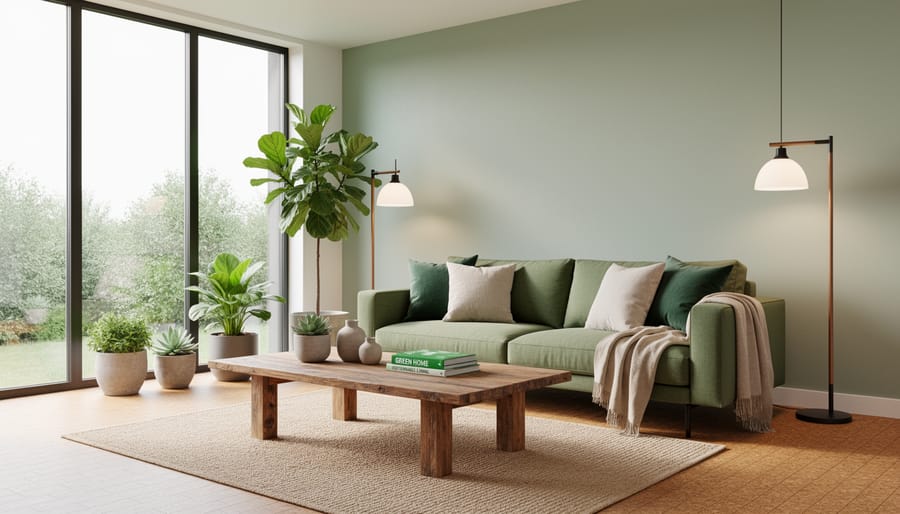
Understanding what modern green design actually costs starts with recognizing that your budget largely depends on the scale of your project. A single-room refresh looks very different financially than building a new eco-home from the ground up, and knowing these ranges upfront helps you set realistic expectations for 2026.
A single-room update represents the most accessible entry point into modern green design. Refreshing a bedroom, bathroom, or home office with sustainable materials, improved lighting, and energy-efficient fixtures typically runs between $3,000 and $8,000. This might include low-VOC paint, bamboo flooring, LED lighting upgrades, and water-saving fixtures. The beauty of starting small is that you can experiment with green materials and modern aesthetics without overhauling your entire home.
Multiple-room projects naturally scale up both in complexity and cost. Renovating a kitchen and living area together, or updating all bedrooms and bathrooms, generally falls in the $15,000 to $45,000 range. At this level, you can integrate more substantial green features like Energy Star appliances, recycled glass countertops, and smart thermostats that manage multiple zones.
| Project Scale | Typical Cost Range (2026) | Example Green Features |
|---|---|---|
| Single Room | $3,000 – $8,000 | Low-VOC paint, bamboo flooring, LED fixtures, water-saving faucets |
| Multiple Rooms | $15,000 – $45,000 | Energy Star appliances, recycled countertops, smart thermostats, sustainable cabinetry |
| Whole-Home Retrofit | $50,000 – $150,000 | Solar panels, high-efficiency HVAC, comprehensive insulation, rainwater harvesting, green roof elements |
| New Construction | $200,000 – $500,000+ | Passive solar design, geothermal systems, advanced air sealing, triple-pane windows, integrated renewable energy |
Whole-home retrofits demand more significant investment, typically ranging from $50,000 to $150,000. This covers comprehensive upgrades like solar panel installation, high-efficiency HVAC systems, extensive insulation improvements, and possibly rainwater harvesting systems. The advantage here is creating a cohesively sustainable home that dramatically reduces ongoing energy and water costs.
New construction sits at the high end, with modern green homes starting around $200,000 and easily exceeding $500,000 depending on size, location, and feature selection. Building from scratch allows you to incorporate passive solar design, geothermal systems, advanced air sealing, and structural elements that would be prohibitively expensive to retrofit. While the upfront cost is substantial, you avoid the compromises inherent in working with existing structures.
Your budget determines your starting point, not your endpoint. Many homeowners begin with a single room, prove the concept to themselves, then expand their green design vision over time as finances allow.
Where Your Green Design Budget Goes
Sustainable Materials and Finishes
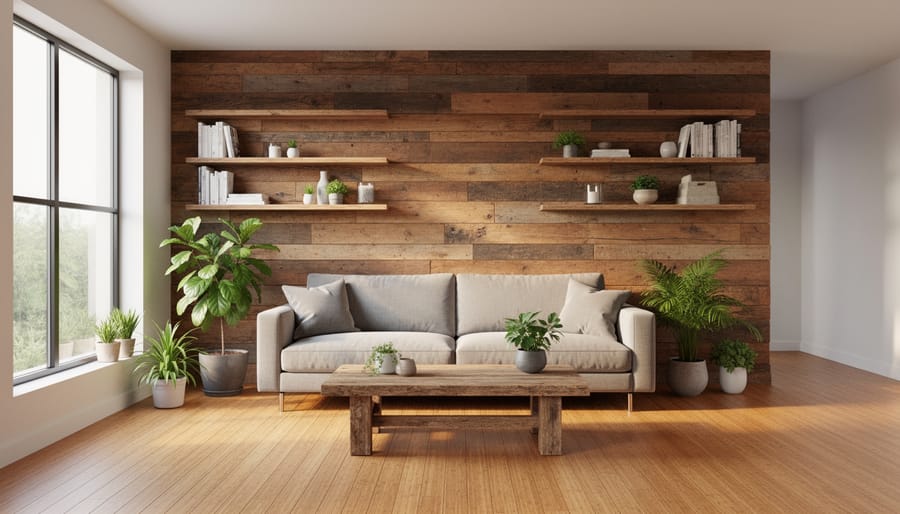
Reclaimed wood runs $5 to $15 per square foot depending on species and finish quality, offering character-rich floors, accent walls, or ceiling beams at prices comparable to premium new hardwoods. Expect salvaged barn wood and industrial timbers at the higher end, with pallet wood projects costing significantly less for DIY applications.
Low-VOC and zero-VOC paints cost $40 to $70 per gallon in 2026, just $10 to $20 more than conventional options. Brands like Benjamin Moore Natura, Sherwin-Williams Harmony, and ECOS deliver modern color ranges without compromising indoor air quality, a minimal premium for healthier living spaces.
Recycled glass countertops range from $50 to $100 per square foot installed, positioning them between laminate and natural stone. These surfaces combine striking visual appeal with durability, though they require professional fabrication.
Bamboo flooring costs $3 to $8 per square foot for materials, competing directly with oak and maple while regenerating in just 3 to 5 years. Strand-woven bamboo at the upper price range matches hardwood durability for high-traffic modern homes.
Cork flooring ($3 to $8 per square foot) and recycled metal tiles ($15 to $30 per square foot) round out popular sustainable finish options, each bringing distinct aesthetics and performance characteristics to contemporary green design.
Energy-Efficient Technology Integration
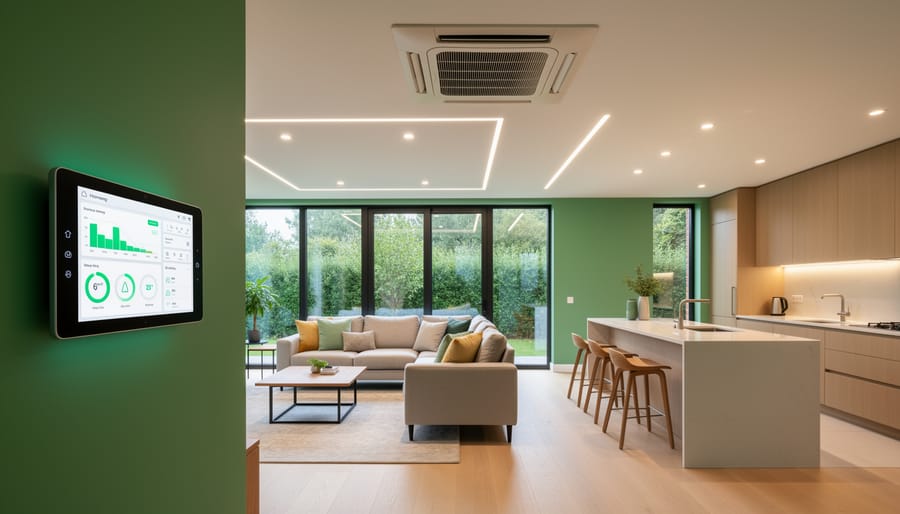
Smart technology is where modern green design truly shines, with upfront costs paying dividends through lower utility bills. A quality smart thermostat runs $150, $300 installed, learning your patterns to cut heating and cooling costs by 10-23% annually. LED lighting retrofits for an average home cost $300, $800, slashing lighting energy use by 75% while lasting 25 times longer than traditional bulbs.
ENERGY STAR certified products deliver measurable savings: expect to pay $800, $2,500 more for a full suite of efficient appliances (refrigerator, dishwasher, washer, dryer) compared to standard models, but they’ll use 10-50% less energy depending on the appliance. The premium typically pays back within three to seven years through reduced electricity and water bills.
High-efficiency HVAC systems represent the largest technology investment at $5,000, $15,000 for whole-home replacement, but they’re transformative. A modern heat pump or variable-speed system can cut heating and cooling costs by 30-40% while improving comfort. Consider phasing technology upgrades, start with the thermostat and LEDs for immediate returns, then tackle major systems when replacement becomes necessary rather than all at once.
Labor and Professional Services
Labor typically accounts for 40-60% of a modern green home design budget. General contractors experienced in sustainable building charge $50-$150 per hour, with rates varying by region and project complexity. Expect to pay a 15-25% markup on total project costs if hiring a full-service green building contractor who coordinates the entire renovation.
Green building consultants, if you’re pursuing certification or want expert guidance on material selection and system integration, run $100-$200 per hour or charge flat fees of $2,000-$8,000 depending on project scope. Specialized installers for solar panels, geothermal systems, or advanced HVAC typically command premium rates, $75-$125 per hour, because they bring technical expertise that ensures optimal performance and warranty compliance. While these professionals cost more upfront, their knowledge prevents expensive mistakes and maximizes long-term efficiency gains.
What Drives Modern Green Design Costs Up or Down
Material Sourcing and Availability
Local materials slash both your carbon footprint and your budget. When you source reclaimed barn wood from a nearby salvage yard instead of ordering certified sustainable timber from across the country, you might save 30-50% while supporting regional businesses. Transportation costs add up quickly, shipping materials cross-country can increase material costs by 15-25%.
Regional abundance matters too. Bamboo flooring costs less in Pacific Northwest markets where it’s readily available, while limestone might be the budget-friendly choice in Texas or Indiana. Check local architectural salvage shops, Habitat for Humanity ReStores, and demolition sales for fixtures, hardware, and structural materials at 50-80% below retail.
Seasonal availability affects pricing: buying reclaimed materials during contractor slow seasons (typically winter) often yields better deals. Building relationships with local demolition contractors gives you first access to salvageable materials before they hit the public market.
Design Complexity and Customization
Simple, minimalist green design choices, like clean-lined bamboo flooring, straightforward LED lighting, and standard Energy Star appliances, typically cost 15-25% less than elaborate custom installations. When you opt for off-the-shelf sustainable products rather than bespoke architectural features, you avoid premium fabrication fees while still achieving modern aesthetics. Customization escalates quickly: a custom reclaimed-wood feature wall might run three times more than standard sustainably-sourced panels, and integrating complex passive solar elements or custom water-harvesting systems requires specialized engineering. That said, some custom features that promise lower energy bills can justify higher upfront costs through long-term savings. Balance your vision by choosing one or two statement custom pieces, perhaps a striking salvaged-timber beam or a living green wall, while keeping surrounding elements simple and standardized. This approach delivers visual impact and sustainability without compounding costs across every surface.
Certification and Documentation
Pursuing formal green building certification can add $2,000 to $30,000 to your project, depending on which program you choose and your home’s size. LEED certification typically costs $3,000, $8,000 for residential projects when you factor in registration fees, documentation, and consultant support. Passive House certification runs higher, often $10,000, $30,000, because it requires rigorous energy modeling, airtightness testing, and detailed construction oversight.
For most homeowners on a budget, certification makes the most financial sense when you’re building new or doing major renovations anyway, and when you plan to sell within a few years. The certification premium can improve resale value in eco-conscious markets. However, if you’re staying put long-term, you can implement the same sustainable principles, efficient insulation, air sealing, quality windows, without paying for official documentation. You’ll enjoy identical performance benefits and energy savings without the certification price tag.
DIY Modern Green Design vs. Hiring Professionals
Budget-Friendly DIY Green Design Projects
Motivated homeowners can tackle several modern green design upgrades that deliver real sustainability gains without professional installation costs. These projects range from simple swaps to weekend builds, each shaving hundreds off your renovation budget while reducing your environmental footprint.
- Switch to LED lightingReplace incandescent and CFL bulbs throughout your home. Cost: $50-150 for a typical house. Saves roughly $75-200 annually on electricity and eliminates the need for professional rewiring.
- Install low-flow fixturesSwap out showerheads, faucet aerators, and toilet components. Basic tools required. Cost: $80-250. Reduces water bills by 25-30% while maintaining pressure.
- Paint with zero-VOC productsUse eco-friendly paints in Benjamin Moore Natura, Sherwin-Williams Harmony, or ECOS lines. Cost difference: typically $5-15 more per gallon than conventional paint, but eliminates indoor air toxins immediately.
- Add weatherstripping and door sweepsSeal gaps around doors and windows. Cost: $30-100. Can reduce heating and cooling costs by 10-20% with an afternoon’s work.
- Increase attic insulationLay additional batts or blown-in insulation (requires protective gear and some physical effort). Cost: $200-600 for materials. Professional installation runs $1,200-2,500, so DIY saves substantially while improving home efficiency year-round.
These projects suit different skill levels and time commitments. Start with lighting and fixtures if you’re new to home improvement, then progress to insulation once you’ve built confidence with basic tools.
When to Call in the Experts
Some modern green upgrades demand professional expertise to avoid costly mistakes and ensure long-term performance. Solar panel installation requires licensed electricians and structural engineers who can properly assess your roof’s load capacity, navigate local permitting, and connect systems safely to the grid, mistakes here compromise both efficiency and safety, making professional solar service essential from day one. HVAC system upgrades to high-efficiency heat pumps or geothermal systems involve refrigerant handling, ductwork modifications, and precise load calculations that directly impact energy savings. Any electrical work beyond swapping fixtures requires a licensed electrician, particularly when adding circuits for EV chargers or upgrading panels. Structural changes that affect load-bearing walls need engineers to maintain home integrity. Complex greywater systems and rainwater harvesting require plumbers who understand local codes and proper filtration. These investments in professional services prevent expensive fixes later and ensure your green features actually deliver the performance you’re paying for.
Smart Budget Strategies for Modern Green Design
Phase Your Project for Financial Flexibility
Breaking your modern green home vision into phases turns an overwhelming project into achievable steps that won’t drain your savings account all at once. Start with high-impact, lower-cost improvements like switching to LED lighting, installing low-flow fixtures, and adding weatherstripping, these upgrades pay for themselves quickly through reduced utility bills while establishing your home’s eco-friendly foundation.
Phase two might tackle one room’s complete transformation: a kitchen renovation with recycled glass countertops and Energy Star appliances, for instance. This focused approach lets you test materials, learn what works in your home, and refine your aesthetic before committing to larger spaces.
Save major investments like solar panels, whole-house HVAC replacement, or structural changes for later phases when you’ve built up both budget and confidence. This staged method also gives you time to accumulate tax credits and rebates from earlier phases to fund subsequent work. Each completed stage delivers immediate satisfaction and measurable energy savings, making the next phase feel financially achievable rather than daunting.
Leverage Incentives and Rebates
Taking advantage of government incentives and utility rebates can dramatically reduce your upfront costs for modern green design. The federal Energy Efficient Home Improvement Credit covers up to 30% of qualifying expenses for items like heat pumps, solar panels, and insulation improvements, with no annual cap through 2032. Many states stack additional credits on top, California, New York, and Colorado offer particularly generous programs for solar installations and energy upgrades.
Your local utility company likely runs rebate programs too. Most offer instant discounts on Energy Star appliances, smart thermostats, and LED lighting upgrades. Some even provide free home energy audits that identify the most cost-effective improvements for your specific situation.
Finding these programs is easier than you might think. Start with DSIRE (Database of State Incentives for Renewables & Efficiency) for a comprehensive search by zip code. Contact your utility provider directly, and check your state energy office website. Many programs operate on a first-come, first-served basis with limited annual funding, so apply early in the calendar year for best availability.
Choose High-Impact, Lower-Cost Features
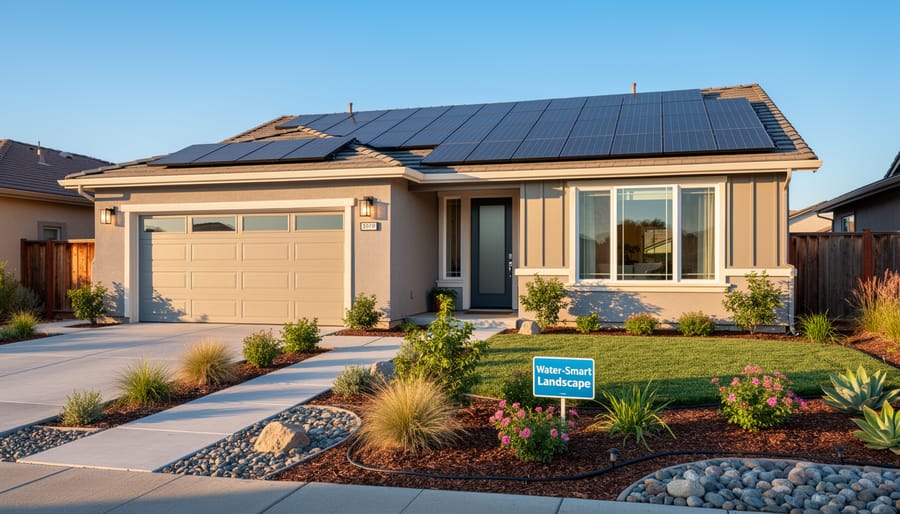
Focus your green design budget where it counts most. LED lighting upgrades deliver immediate energy savings, often cutting lighting costs by 75%, while requiring minimal investment. A whole-home LED conversion typically costs $200, $500 but pays for itself within two years through lower electricity bills and extended bulb life.
Low-flow fixtures represent another quick win. Installing WaterSense-certified faucets, showerheads, and toilets costs $150, $400 per bathroom but can reduce water consumption by 20-30%, trimming utility bills immediately while supporting the clean, minimalist aesthetic of modern green design.
Smart thermostats ($150, $300 installed) optimize heating and cooling schedules, reducing energy waste by up to 23% annually. They integrate seamlessly with contemporary interiors and require no ongoing maintenance.
Exterior upgrades like planting native trees strategically near windows provides natural cooling and privacy for roughly $50, $200 per tree, far less than mechanical cooling upgrades while enhancing curb appeal.
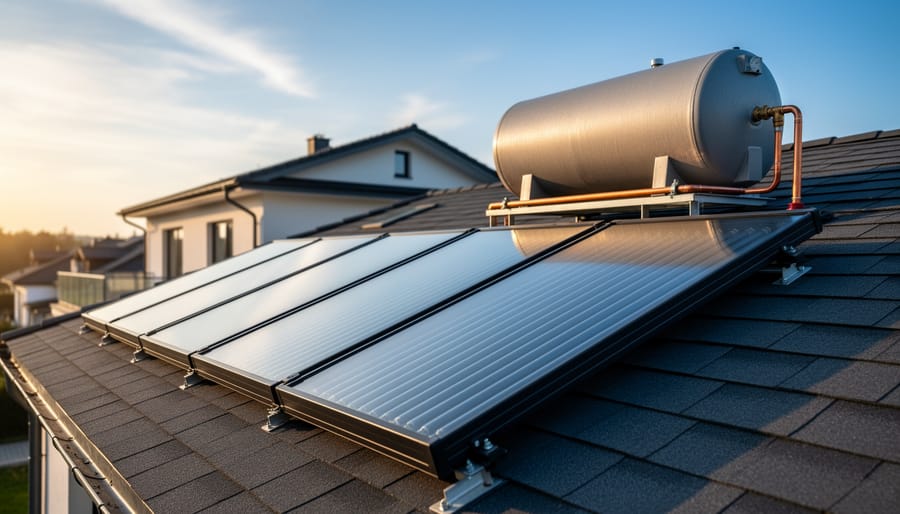
If you’re planning larger investments later, consider groundwork for future additions like thermal solar systems or rainwater collection. Running conduit during current renovations costs little now but saves thousands when you’re ready to expand your green infrastructure.
Frequently Asked Questions
What’s the typical cost per square foot for modern green home design?
Modern green design typically adds $15 to $50 per square foot to renovation costs, depending on material choices and technology integration. A full new build with comprehensive green features generally runs $150 to $300 per square foot, though regional variations and design complexity significantly affect these ranges.
How long does it take to recoup the investment through energy savings?
Most homeowners see payback periods of 5 to 15 years for energy-efficient upgrades, with solar panels and high-performance insulation typically paying for themselves faster than purely aesthetic sustainable materials. The exact timeline depends on your local utility rates, the specific improvements made, and how aggressively you prioritize high-impact efficiency features.
Do green features actually increase home resale value?
Homes with modern green features typically sell for 3% to 8% more than comparable conventional properties, with energy certifications and solar systems offering the strongest returns. Buyers increasingly prioritize lower operating costs and environmental responsibility, making these investments attractive in competitive markets.
What financing options exist for green home improvements?
Green home financing includes FHA Energy Efficient Mortgages, PACE (Property Assessed Clean Energy) loans that attach to your property tax bill, and home equity lines specifically for efficiency upgrades. Many states and utilities also offer zero-interest or subsidized loans for qualifying sustainable improvements.
Beyond these core questions, homeowners often wonder about the minimum investment needed to begin. You can start a green design transformation with as little as $500 for a single room, focusing on low-flow fixtures, LED lighting, and eco-friendly paint. Even modest budgets allow meaningful progress when you understand when to call an expert versus handling improvements yourself.
The real key is prioritizing features that deliver both immediate utility savings and long-term value. Start with insulation and air sealing if your home has efficiency gaps, then layer in modern sustainable materials and smart technology as your budget allows.
Modern green home design doesn’t require unlimited funds or a complete overhaul to make a real difference. Whether you have $3,000 or $300,000 to invest, you can create spaces that reflect contemporary aesthetics while reducing your environmental footprint and utility bills.
The key is distinguishing between essential upgrades that deliver immediate returns and enhancements you can add later. Start with high-impact, lower-cost improvements like LED lighting, low-flow fixtures, or a room painted with zero-VOC products. These build momentum and prove that sustainable design works within your lifestyle.
Each green choice compounds over time. That efficient window treatment reduces cooling costs every summer. Those reclaimed wood shelves prevent new lumber harvesting and add character for decades. The smart thermostat keeps saving energy long after installation day.
You don’t need to transform your entire home overnight. Pick one room, one system, or one material swap that excites you. Complete it well, enjoy the results, then plan your next sustainable upgrade. This phased approach keeps projects manageable financially while steadily moving your home toward the modern, eco-conscious design you envision.