

Check your dryer vent at least twice a year for lint buildup that forces your appliance to work harder and consume up to 30% more energy. A clogged vent doesn’t just waste electricity—it transforms your efficient dryer into an energy-draining appliance that costs you money with every load.
Most homeowners don’t realize that the fluffy lint gathering in their dryer vent is silently increasing their utility bills. According to experts at dryerventcleanexperts.com, when airflow gets restricted, your dryer needs longer cycles to dry the same amount of laundry. What should take 45 minutes might stretch to 90, doubling your energy consumption for that load. This inefficiency accumulates quickly, adding $15 to $30 monthly to your energy costs.
The good news? Cleaning your dryer vent is one of the simplest ways to reduce your home’s energy footprint while saving money. Whether you tackle it yourself or hire a professional, this maintenance task delivers measurable results you’ll see on your next utility bill.
Understanding the connection between vent maintenance and energy efficiency empowers you to make informed decisions about your home’s sustainability. This guide breaks down exactly how clogged vents waste energy, what cleaning actually costs versus what you’ll save, and when professional help makes sense. You’ll discover practical steps that align perfectly with your commitment to sustainable living—without overwhelming technical details or expensive overhauls.
The Hidden Energy Drain in Your Laundry Room
You might not realize it, but your dryer could be quietly draining extra energy every time you run a load of laundry. When your dryer vent becomes clogged with lint, dust, and debris, it creates a hidden energy vampire that can significantly impact both your utility bills and your carbon footprint.
Here’s what’s happening behind the scenes: your dryer needs proper airflow to work efficiently. As hot, moist air cycles through your clothes, it needs somewhere to go. That’s where the vent comes in. When lint accumulates in the vent system, it acts like a cork in a bottle, restricting the airflow your dryer depends on. This simple blockage creates a domino effect on your home energy efficiency.
Think of it like trying to breathe through a straw. Your dryer’s heating element keeps working overtime, generating more heat to compensate for poor air circulation. Meanwhile, the moisture from your wet clothes has nowhere to escape, so they stay damp longer. The result? Your dryer runs longer cycles, sometimes requiring multiple rounds to fully dry a single load.
The science is straightforward: restricted airflow means trapped heat and humidity. Your dryer becomes less efficient at transferring heat to your clothes and removing moisture. What should take 45 minutes might stretch to 90 minutes or more. That extra runtime translates directly into wasted electricity or gas, depending on your dryer type.
Consider a typical scenario: if you’re running your dryer for an extra 30 minutes per load, and you do laundry three times weekly, that’s an additional hour and a half of unnecessary energy consumption every single week. Over a year, those extra hours add up to substantial energy waste that’s entirely preventable with proper vent maintenance. The good news? Once you understand this connection, fixing it becomes a straightforward path to meaningful energy savings.
What Your Energy Bill Isn’t Telling You
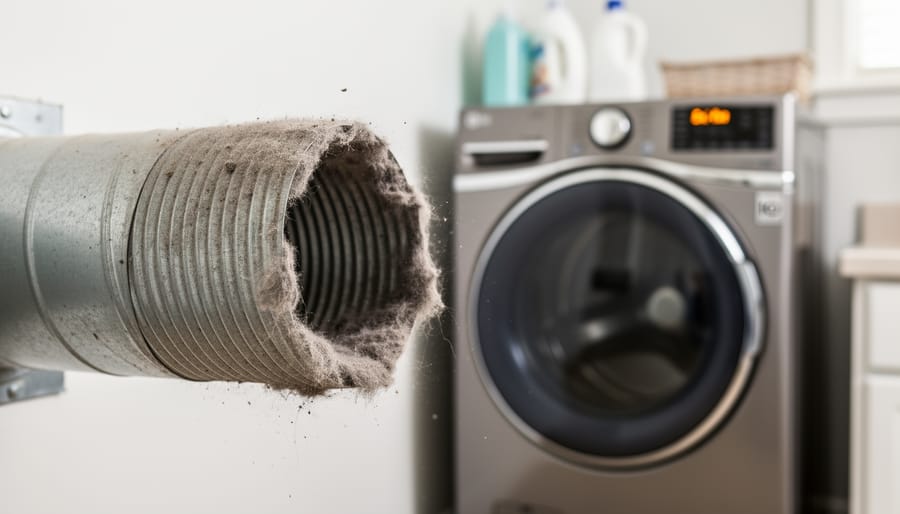
You might be surprised to learn that your monthly energy bill includes a hidden cost you’ve probably never considered: your dryer vent. When lint builds up in your vent system, your dryer has to work significantly harder to dry each load of laundry, and that extra effort shows up in your electricity or gas consumption.
According to HVAC efficiency experts, a clogged dryer vent can increase your dryer’s energy consumption by 25-30% on average. To put that in perspective, if your dryer typically costs about $10 per month to run, a blocked vent could add an extra $2.50 to $3.00 monthly, or $30 to $36 annually. For households doing more laundry, these numbers climb even higher.
The problem compounds over time. As lint accumulation worsens, some dryers struggle to complete cycles efficiently, forcing you to run loads twice or extend drying times. Energy auditors have documented cases where homeowners unknowingly paid 50% more than necessary simply because their vents hadn’t been cleaned in years.
The good news? The savings after proper vent cleaning are immediate and measurable. Homeowners consistently report their drying times dropping from 90 minutes back down to 45-50 minutes per load after professional cleaning. One family in Colorado tracked their energy usage and discovered they saved $42 in the first year alone after addressing their neglected dryer vent.
Professional vent cleaning typically costs between $100-$170, meaning most households recoup this investment through energy savings within three to five years. When you factor in the extended lifespan of your dryer and reduced fire risk, the return on investment becomes even more compelling. Your energy bill might not explicitly list “dryer vent inefficiency,” but rest assured, you’re paying for it nonetheless.
Beyond Energy: The Ripple Effect of Neglected Vents
When you invest time in cleaning your dryer vent, you’re doing more than just trimming your energy bill. You’re setting off a positive chain reaction that touches multiple aspects of your home and the environment.
Let’s start with your wallet and your dryer’s longevity. A clean vent means your appliance doesn’t have to work as hard to do its job. This reduced strain can add years to your dryer’s lifespan, potentially saving you hundreds or even thousands of dollars on premature replacement costs. Think of it as preventive care for your appliance, similar to regular oil changes for your car.
The environmental benefits extend beyond energy savings too. When your dryer operates efficiently, it uses less electricity or gas, which directly translates to a reduced carbon footprint. For those of us committed to sustainable living, this is a meaningful way to shrink our environmental impact without major lifestyle changes.
You’ll also notice practical improvements in your daily routine. Clean vents mean faster drying times, which saves you time and reduces the temptation to run multiple cycles. What once took two loads might now take just one, giving you back precious minutes in your day while using less energy overall.
Perhaps most importantly, maintaining clear vents dramatically improves home safety. Lint buildup is a leading cause of residential dryer fires, with thousands occurring each year. By keeping your vents clean, you’re protecting your family and your home from this preventable hazard.
The beauty of dryer vent maintenance is how these benefits interconnect. Better efficiency means lower emissions, which supports environmental health. Longer appliance life means fewer resources consumed in manufacturing replacements. Faster drying means less energy waste. It’s a perfect example of how one small sustainable practice can create multiple positive outcomes, proving that the greenest building truly is the one that works smarter, not harder.
Signs Your Dryer Vent Needs Attention Now
Your dryer can tell you exactly when it needs help—you just need to know what to look for. The good news? Spotting these warning signs early means you can address the problem before it seriously impacts your energy bills or safety.
The most obvious signal is longer drying times. If your clothes used to dry in one cycle but now need two or three rounds, your dryer is working overtime and wasting energy with each extra minute. This happens because blocked airflow prevents moisture from escaping efficiently.
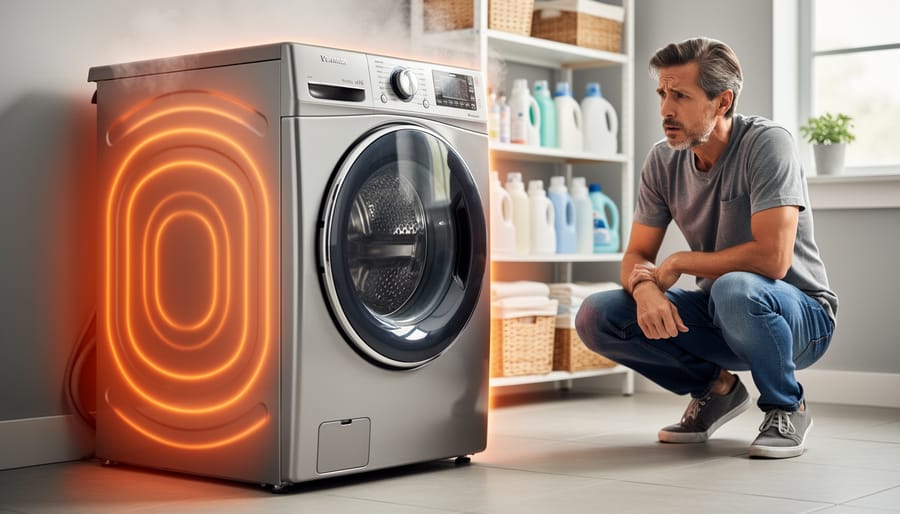
Touch the top of your dryer after a cycle. Does it feel unusually hot? Excessive heat buildup indicates that air isn’t flowing properly through the vent system. You might also notice your laundry room feels warmer than usual or that your clothes come out hotter than they should.
Take a moment to smell your freshly dried laundry. A musty or burning odor is a red flag that lint is accumulating somewhere in the system. This trapped moisture and debris doesn’t just reduce efficiency—it creates potential fire hazards.
Check the outdoor vent opening while your dryer is running. The flap should open easily with strong airflow. If it barely moves or stays closed, something is blocking the path. You might also see lint collecting around the outside vent cover—a clear sign that buildup is happening inside.
Finally, open your lint trap. If you’re finding excessive amounts of lint or notice it in unusual places around your laundry area, your venting system isn’t doing its job properly.
Catching even one of these signs means it’s time to take action. The sooner you address vent issues, the faster you’ll return to efficient, cost-effective drying cycles.
Professional Cleaning vs. DIY: Making the Smart Choice
You’ve got two main paths for tackling dryer vent cleaning: rolling up your sleeves and doing it yourself, or bringing in a professional service. Both have their place, and understanding when each makes sense can help you keep your home running efficiently while being smart with your resources.
DIY cleaning works well for regular maintenance between professional cleanings. You’ll need a dryer vent cleaning kit (available at most hardware stores for $20-30), which includes flexible rods and a brush. This approach lets you clean the visible lint trap, the area just behind it, and the first few feet of ductwork. It’s perfect for maintaining your system every few months and costs next to nothing after the initial investment. However, DIY methods have real limitations. Most homeowner kits can’t reach the entire length of your vent, especially if it runs through walls or has multiple bends. You also won’t have the inspection tools to spot hidden problems like damaged ducts or improper installation.
Professional cleaning brings specialized equipment and expertise that make a meaningful difference for energy efficiency. Pros use high-powered vacuums and rotary brush systems that reach the entire vent length, removing stubborn buildup that DIY tools simply can’t touch. They’ll also inspect for problems like crushed ducts, poor connections, or excessive bends that waste energy. This thoroughness directly translates to better airflow and lower energy consumption.
Here’s a practical approach: handle basic maintenance yourself every 2-3 months by cleaning your lint trap and the accessible areas near your dryer. Schedule professional cleaning annually, or every six months if you have a large family or do lots of laundry. This combination gives you the best of both worlds—you’re staying on top of maintenance while ensuring the deep cleaning that maximizes your energy savings.
If you haven’t had professional cleaning in over a year, notice longer drying times, or your dryer feels hotter than usual, professional service is the smart choice right now.

Making Clean Vents Part of Your Sustainable Home Strategy
Making dryer vent maintenance a regular habit doesn’t have to be complicated. Think of it as an essential part of your home energy efficiency plan, just like changing air filters or adjusting your thermostat seasonally.
Here’s a simple maintenance schedule to follow: Have your dryer vent professionally cleaned at least once a year. If you do multiple loads weekly or have a longer vent run, consider increasing this to twice annually. Between professional cleanings, take a few preventive steps that make a real difference.
After each load, clean your lint screen thoroughly. Monthly, vacuum around the dryer and the exterior vent opening to remove accumulated lint. Every few months, check that air flows freely from the outside vent while the dryer runs. If airflow seems weak, it’s time for a cleaning rather than waiting for your scheduled appointment.
Keep an eye out for warning signs like longer drying times, clothes feeling hotter than usual, or excess lint around the dryer area. These signals mean your system needs attention now.
Consider logging your maintenance dates and any observations in a home maintenance calendar. This simple tracking helps you stay consistent and notice patterns over time. You might even discover that regular cleaning reduces your average drying time, making the energy savings visible in your routine.
By treating vent cleaning as an ongoing practice rather than a one-time fix, you’re building sustainable habits that protect both your wallet and the environment.
Here’s the encouraging truth: dryer vent cleaning isn’t just another home maintenance task to add to your never-ending to-do list. It’s one of the simplest, most cost-effective steps you can take toward a more energy-efficient home. We’re talking about real savings, typically between $18 to $24 annually on your energy bills, plus the peace of mind that comes from extending your dryer’s lifespan and reducing fire risk.
The beauty of this particular efficiency upgrade is its accessibility. Whether you choose the DIY route for around $30 in supplies or invest in professional cleaning once a year for $90 to $160, you’re making a smart decision that pays dividends. There’s no complicated installation, no major lifestyle change, and no specialized knowledge required. You’re simply removing the lint buildup that’s forcing your dryer to work harder than necessary.
Think of clean dryer vents as low-hanging fruit on your sustainable living journey. While you’re researching solar panels or considering major home renovations, this straightforward maintenance task delivers immediate results. Start with what’s manageable. Check your vent today, schedule a cleaning if needed, and mark your calendar for annual maintenance. Small actions compound over time, and this simple habit positions you as someone who’s actively creating a more efficient, sustainable home. You’ve got this.